Road Narrows Sign: Meaning and What to Do
The yellow diamond for a narrowing road warns that the pavement ahead loses width without losing a lane count: lanes get thinner, shoulders shrink or vanish, and the margins you have been unconsciously using disappear.
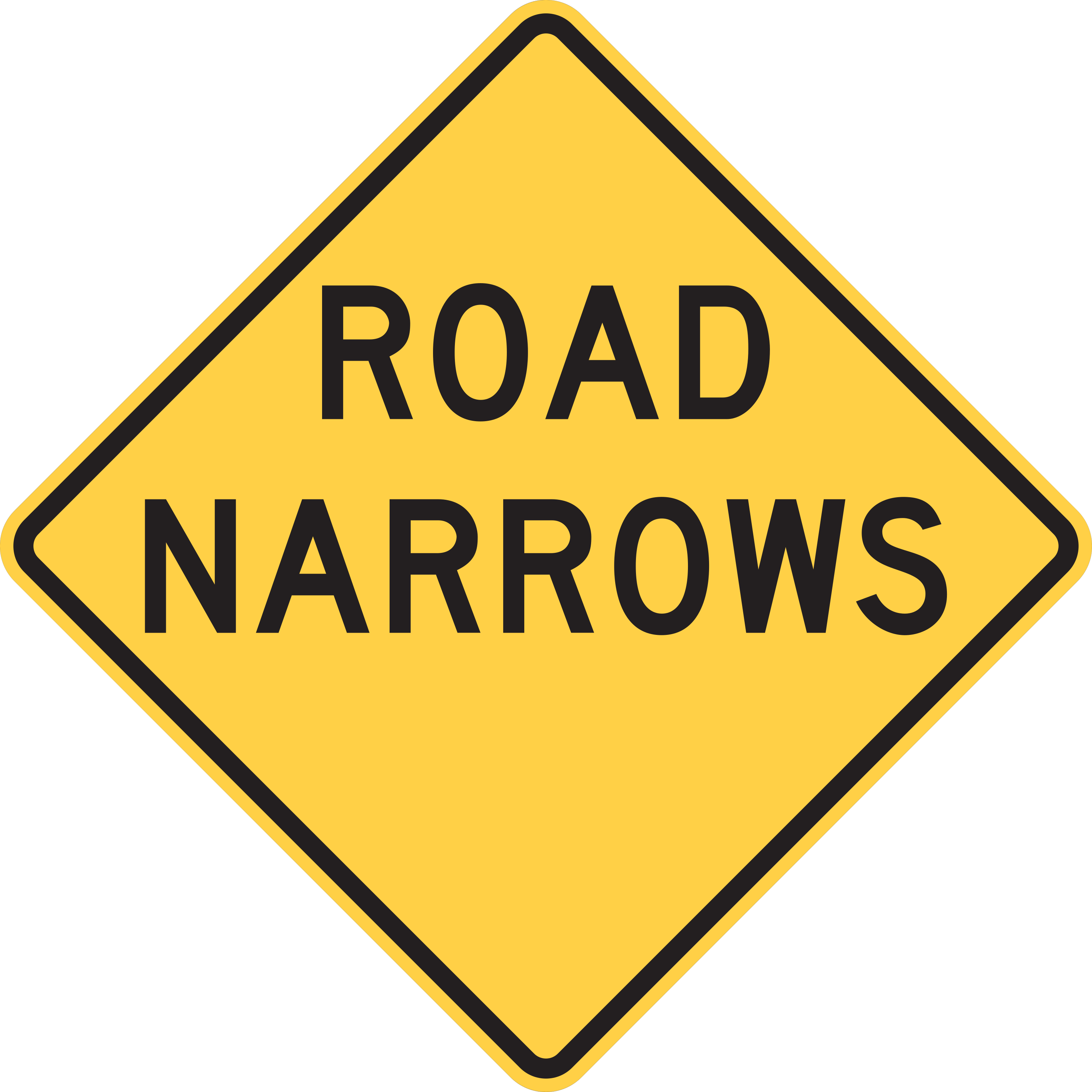
Road Narrows Sign
Narrowing sections punish inattention sideways: mirror strikes, edge drops, and squeezed cyclists. The sign asks you to trade speed for the precision the thinner lane demands.
What to do when you see the road narrows sign
Slow modestly, tighten your lane discipline, and increase following distance so you are steering, not reacting, through the narrow section. Give cyclists and pedestrians extra consideration; the narrowing takes their space first.
The signs it is confused with
Grouped with Narrow Bridge and Lane Ends: narrows keeps all lanes at reduced width, lane ends removes one. Tests check that distinction with the symbol drawings.
Signs are one topic of ten on every test
Every state practice test covers signs, signals, and markings among its ten topics, with every answer explained. Pick your state and see how its exam asks about signs like this one; it is free, with no sign-up.
Choose your stateQuestions about the road narrows sign
What does the road narrows sign mean?
The road ahead keeps its lanes but loses width: thinner lanes, reduced or absent shoulders. Slow slightly and steer with more care.
How does it differ from lane ends?
Road Narrows keeps every lane at reduced width; Lane Ends removes a lane and requires a merge. The symbols draw the difference.
What is the practical risk in a narrow section?
Sideways contact: mirrors, edge drops, and crowding cyclists. Precision replaces the margin the road took away.
What about wide vehicles and trailers?
They feel it first: check mirrors, hold the center of your lane, and resist drifting from oncoming traffic into the edge.
How is it tested?
As identification within the width-warning family and in scenarios about speed and lane discipline through squeezed sections.