Pavement Ends Sign: Meaning and What to Do
The yellow diamond announcing PAVEMENT ENDS marks the change from asphalt to gravel or dirt ahead. The surface you have been trusting for grip is about to be replaced by one that offers less of it, unevenly.
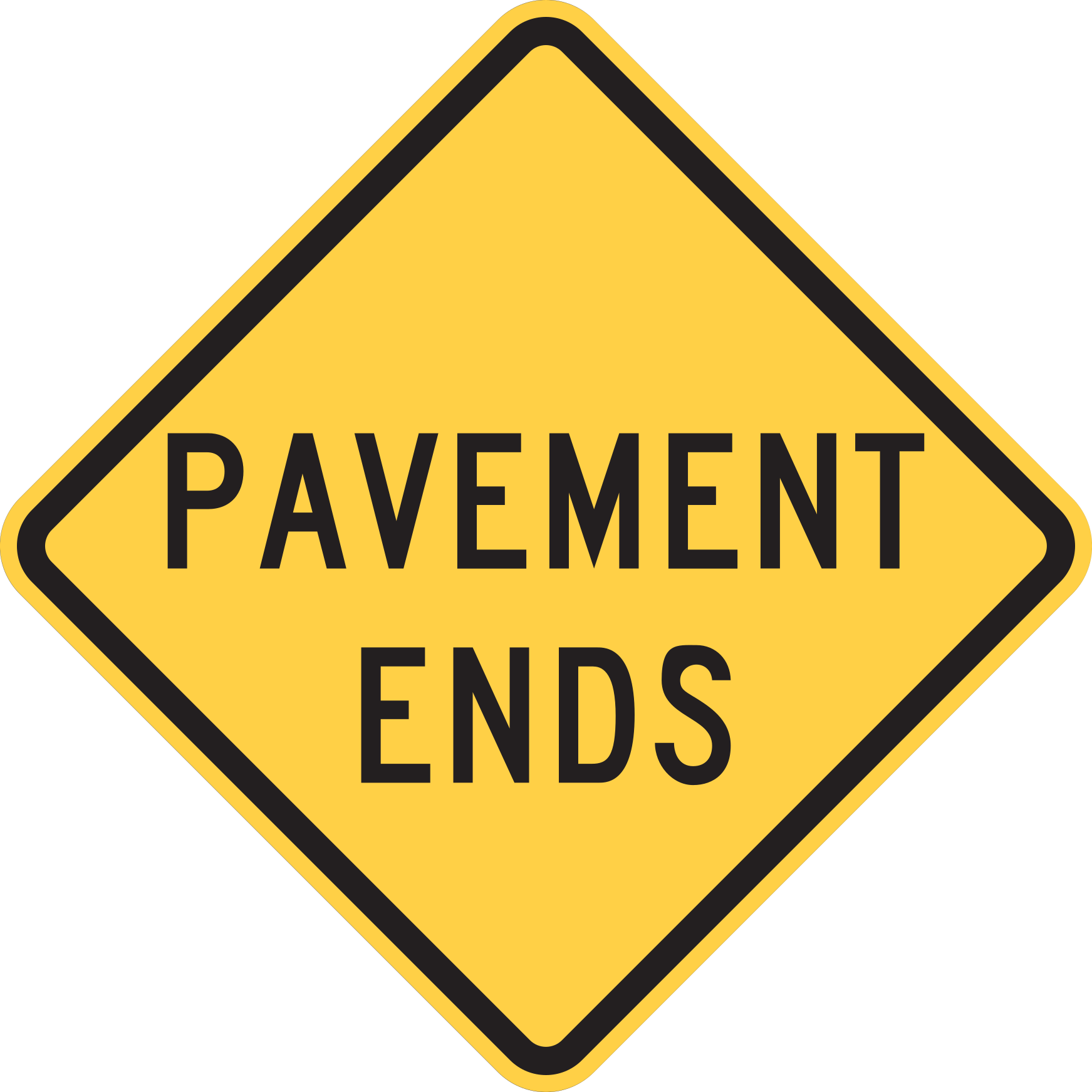
Pavement Ends Sign
The transition itself is the sharpest moment: a car crossing from pavement to gravel at speed can slide at the seam, and braking distances lengthen immediately. Dust, washboard, and loose edges follow.
What to do when you see the pavement ends sign
Slow before the pavement ends, not after the first slide. On the unpaved surface, keep speeds modest, steering and braking gentle, and following distance long; dust hides the car ahead and washboard walks the rear axle sideways.
The signs it is confused with
Grouped with the other surface-condition warnings, gravel, low shoulder, loose surface. Tests focus on timing: the speed change belongs before the transition line, on the last of the grip.
Signs are one topic of ten on every test
Every state practice test covers signs, signals, and markings among its ten topics, with every answer explained. Pick your state and see how its exam asks about signs like this one; it is free, with no sign-up.
Choose your stateQuestions about the pavement ends sign
What does the pavement ends sign mean?
The paved surface becomes gravel or dirt ahead. Slow down before the transition and drive the softer surface gently.
Why slow before the surface changes?
The seam is where grip drops suddenly; braking after it means braking on gravel. Use the last pavement for the speed change.
What changes on gravel?
Longer stopping distances, looser steering, dust that hides traffic, and washboard that unsettles the rear. Every input gets gentler.
How do motorcycles handle the transition?
With respect: upright, slowed well before, steady throttle, no mid-gravel braking. The same discipline as any loose surface.
How is it tested?
As surface-warning identification and in speed-adjustment questions about acting before the hazard rather than in it.