Narrow Bridge Sign: Meaning and What to Do
The yellow diamond for a narrow bridge warns that the span ahead carries two-way traffic with less width than the road that feeds it: lanes squeeze, shoulders vanish, and mirrors pass closer than anywhere else on the route.
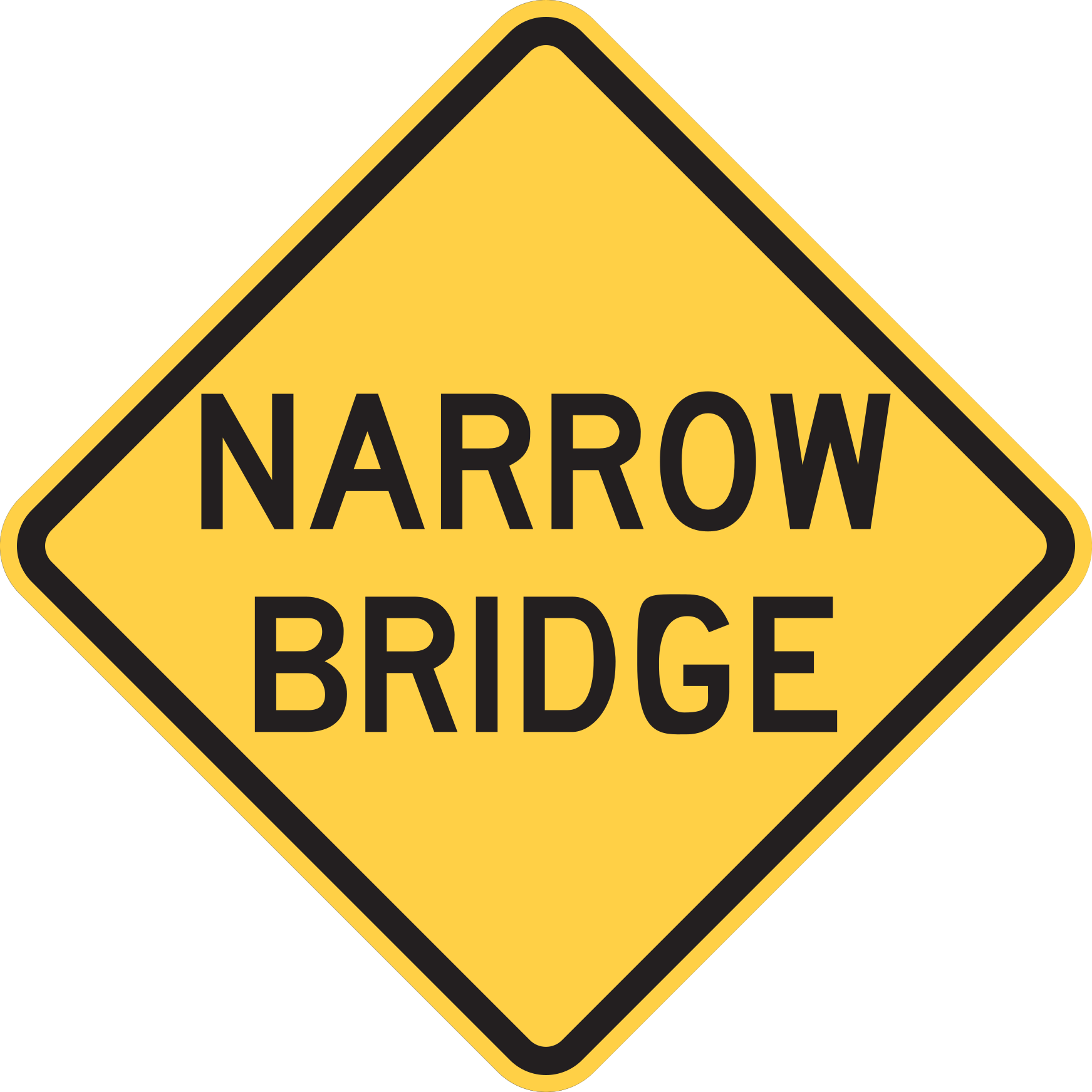
Narrow Bridge Sign
The span is a commitment: once on it there is nowhere to give ground, so the adjustments happen before the abutments. Meeting a wide load or a drifting oncoming vehicle mid-span is the scenario the sign wants you to pre-solve.
What to do when you see the narrow bridge sign
Slow before the bridge, center yourself in your narrowed lane, and time your entry to avoid meeting oversized oncoming traffic mid-span when you can. Hold off passing and give cyclists the full lane across; there is no spare width to share.
The signs it is confused with
Related to One Lane Bridge signs, where the span is narrower still and one direction must yield entirely; tests distinguish the two by whether both directions fit at once.
Signs are one topic of ten on every test
Every state practice test covers signs, signals, and markings among its ten topics, with every answer explained. Pick your state and see how its exam asks about signs like this one; it is free, with no sign-up.
Choose your stateQuestions about the narrow bridge sign
What does the narrow bridge sign mean?
The bridge ahead is narrower than the road: both directions still fit, but with reduced width and no shoulders. Slow and center up before entering.
How is it different from a one lane bridge?
A narrow bridge holds both directions tightly; a one-lane bridge holds only one at a time, with a posted yield for one direction.
What should I do about oncoming trucks at the span?
Time your crossing to avoid meeting the widest traffic mid-bridge where you can, and hug your side steadily when you cannot.
Why no passing on or near the span?
There is no width or escape room; a pass that must abort on a bridge has nowhere to go. Wait for the open road.
How is it tested?
As width-warning identification and in courtesy or timing scenarios about meeting traffic at restricted spans.