Low Shoulder Sign: Meaning and What to Do
The yellow diamond reading LOW SHOULDER warns that the shoulder is lower than the pavement, leaving a drop at the edge of the lane. A tire that goes over the edge falls into the gap, and climbing back out can throw the car across the road.
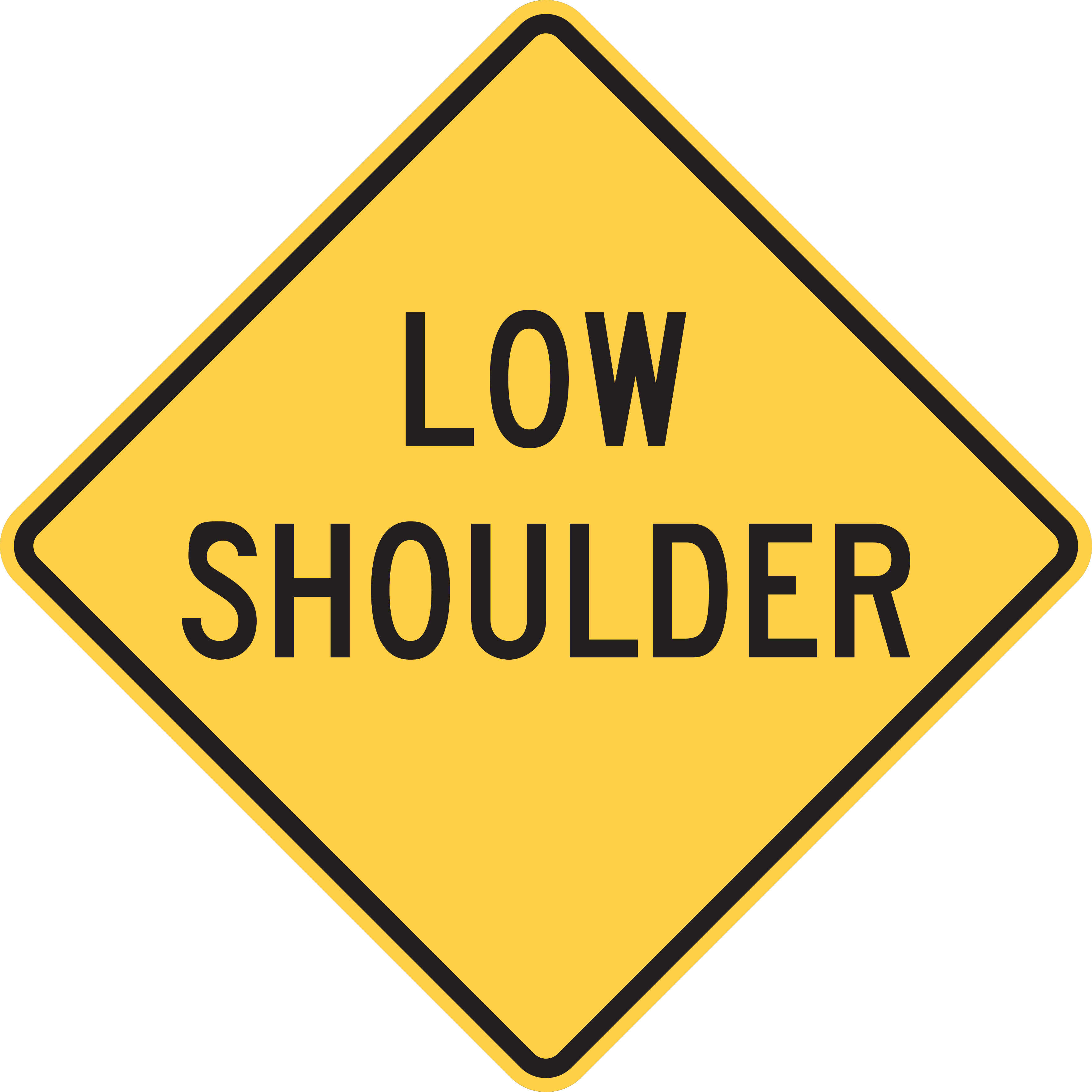
Low Shoulder Sign
Low shoulders are common where a road has been resurfaced and the new layer sits above the old shoulder, and on rural roads where the gravel edge has eroded. A related sign, Shoulder Drop-Off, is used where the drop is severe.
What to do when you see the low shoulder sign
Keep well inside the lane and do not let a wheel wander to the edge, especially on curves and when meeting wide vehicles. If a wheel does drop off, do not try to climb straight back up at speed; slow down first, then turn the wheel firmly enough to bring the tire up over the lip when the road is clear.
The signs it is confused with
Tests pair it with Soft Shoulder, which describes a loose surface rather than a height difference, and with Pavement Ends, which warns that the paved road itself gives way to gravel. LOW describes the edge, not the surface.
Signs are one topic of ten on every test
Every state practice test covers signs, signals, and markings among its ten topics, with every answer explained. Pick your state and see how its exam asks about signs like this one; it is free, with no sign-up.
Choose your stateQuestions about the low shoulder sign
What does the low shoulder sign mean?
The shoulder sits below the level of the pavement, so there is a drop at the edge of the lane. Stay on the pavement.
What happens if a wheel drops off a low shoulder?
The tire falls into the gap and scrubs against the pavement edge. Steering back up too sharply can send the car across the road, so slow first and return deliberately.
Why do roads have low shoulders?
Resurfacing raises the pavement above the old shoulder, and erosion lowers gravel edges over time. The sign stays up until the shoulder is rebuilt.
How is it different from soft shoulder?
Soft describes what the shoulder is made of; low describes how far it sits below the road. Both are reasons to stay on the pavement.
How does this sign appear on the written test?
As a meaning question grouped with the other shoulder and surface warnings, and in recovery scenarios about wheels leaving the pavement.