Lane Ends Sign: Meaning and What to Do
The yellow diamond showing two lines pinching together warns that one of your road's own lanes is ending ahead, usually the right, and its traffic must merge into the lane that continues. Unlike the merge sign, no outside road is joining; the road itself is narrowing.
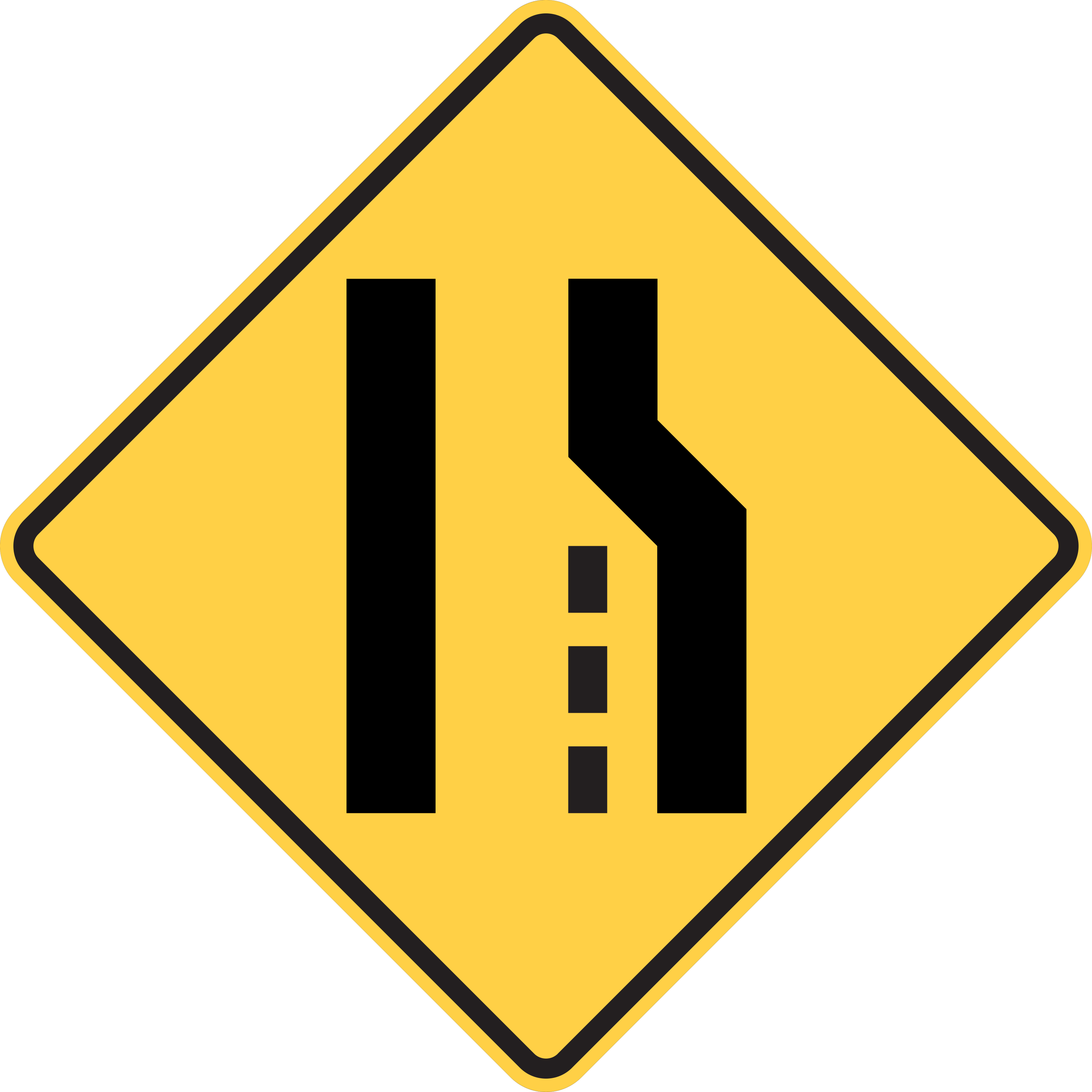
Lane Ends Sign
The merging driver, the one in the ending lane, must yield; the continuing lane holds the right of way. Everything smooth about a lane drop comes from early awareness, which is exactly what the diamond provides.
What to do when you see the lane ends sign
If your lane is ending, signal and merge early at matched speed. If yours continues, hold steady speed and leave usable gaps. In congestion, alternating at the merge point moves the most traffic; several state manuals now teach the zipper by name.
The signs it is confused with
The classic confusion is with the Merge sign, joining arrows for outside traffic entering, versus this pinching symbol for the road's own lane disappearing. Tests swap them constantly; read whether traffic is joining or the pavement is narrowing.
Signs are one topic of ten on every test
Every state practice test covers signs, signals, and markings among its ten topics, with every answer explained. Pick your state and see how its exam asks about signs like this one; it is free, with no sign-up.
Choose your stateQuestions about the lane ends sign
What does the lane ends sign mean?
One of the road's lanes ends ahead and its traffic must merge into the continuing lane. The pinched-lines symbol is the road narrowing.
Who yields when a lane ends?
The driver in the ending lane. Traffic in the continuing lane has the right of way and helps most by holding a steady speed with gaps.
How is this different from the merge sign?
Merge shows another roadway's traffic joining yours; Lane Ends shows your own road losing a lane. Different geometry, different arrows, same courtesy.
Is using the ending lane to the merge point wrong?
In congestion, no; a calm zipper at the taper uses both lanes fully. In free flow, merging early and predictably is the better habit.
How is lane ends tested?
As the swap-pair with the merge sign and in right-of-way questions about who must give way at a lane drop.