Fallen Rocks Sign: Meaning and What to Do
The yellow diamond reading FALLEN ROCKS warns that rock from a slope above the road may be lying on the pavement, or may fall while you are passing. It is posted in cuts through hills and mountains where the rock face is unstable, especially after rain, freezing, or thaw.
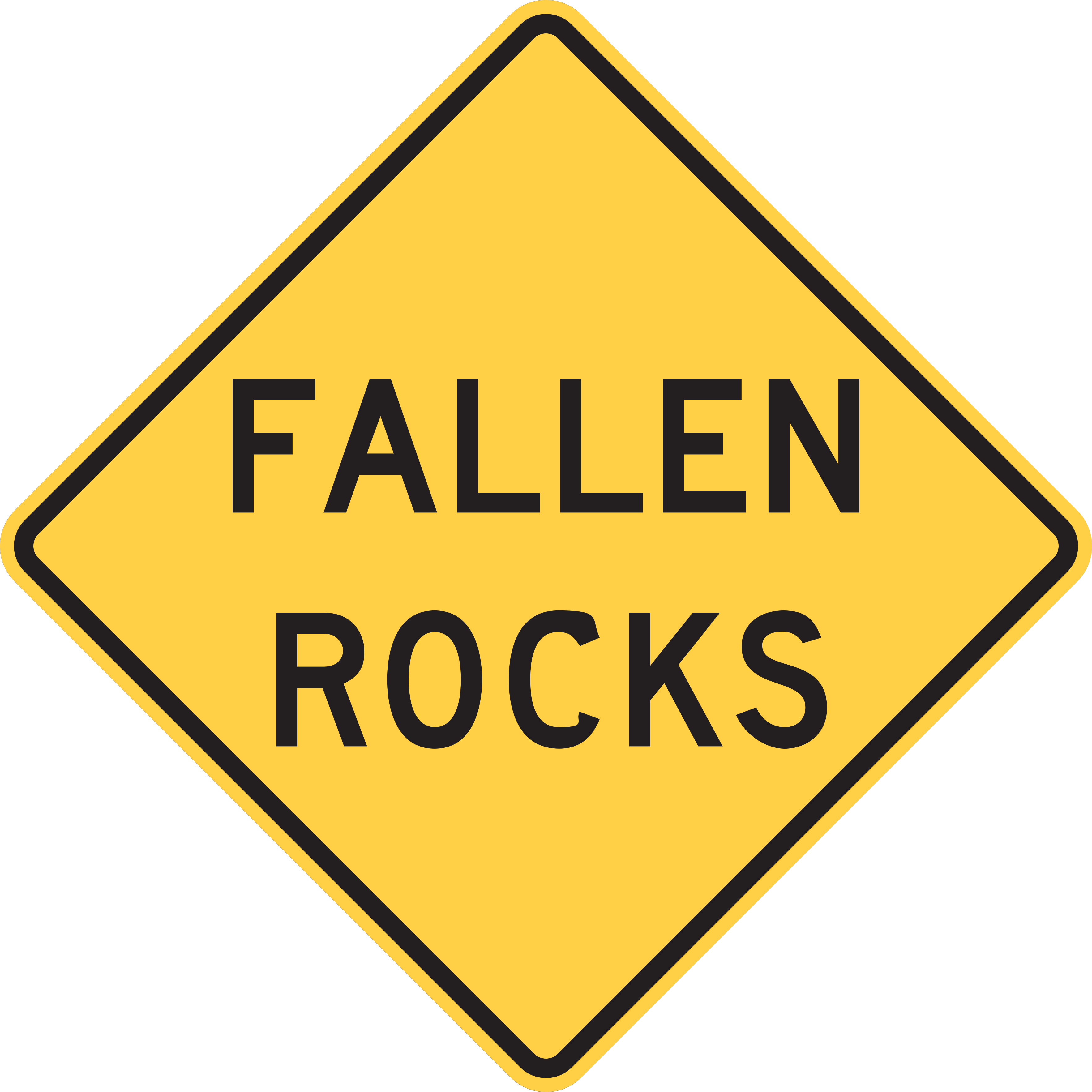
Fallen Rocks Sign
A rock the size of a football will damage a car; one the size of a suitcase will stop it. The sign asks you to watch the road surface as closely as the traffic, and it warns that stopping under the slope to inspect damage is the one thing you should not do.
What to do when you see the fallen rocks sign
Slow down, scan the pavement ahead for debris, and keep extra distance so you can see rocks the vehicle ahead is about to swerve around. If you must stop, do it past the cut, not beneath it. Be especially alert after storms and during spring thaw, when rockfalls are most common.
The signs it is confused with
Tests pair it with Loose Gravel, which warns of a surface that reduces traction rather than objects in the lane, and with Soft Shoulder and Low Shoulder, which describe the road edge. FALLEN ROCKS is about what may be on or coming onto the road.
Signs are one topic of ten on every test
Every state practice test covers signs, signals, and markings among its ten topics, with every answer explained. Pick your state and see how its exam asks about signs like this one; it is free, with no sign-up.
Choose your stateQuestions about the fallen rocks sign
What does the fallen rocks sign mean?
Rocks may be on the road ahead, or may fall onto it. Slow down and watch the pavement for debris.
Where is it posted?
In cuts through hills and mountains where the slope beside the road is unstable, and along cliffs where rock can drop directly onto the lanes.
Should I stop if I see rocks on the road?
Slow and steer around them if you can do so safely. If you must stop, do it beyond the slope, not under it, and report large debris to the highway agency or police.
When are rockfalls most likely?
After heavy rain, during freeze-thaw cycles in spring, and after earthquakes. The sign is a year-round warning, but those conditions raise the odds.
How does this sign appear on the written test?
As a meaning question in the warning-sign section, often alongside the other road-condition diamonds like Loose Gravel and Soft Shoulder.