Do Not Stop on Tracks Sign: Meaning and What to Do
The white rectangle reading DO NOT STOP ON TRACKS is posted at railroad crossings where traffic backs up from a signal or intersection just beyond the tracks. It states the rule that applies at every crossing: never enter the crossing unless you can drive completely through it and clear the far side.
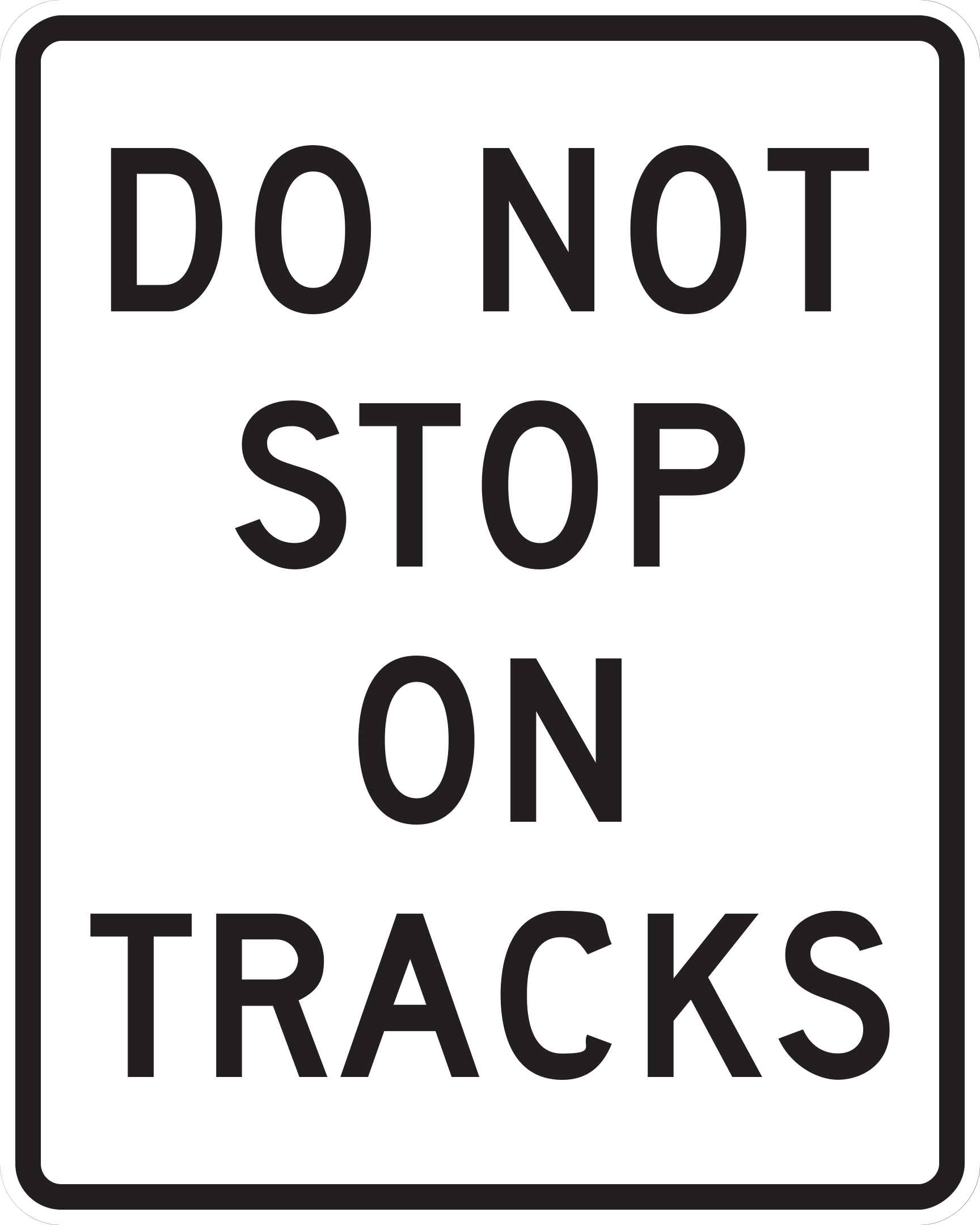
Do Not Stop on Tracks Sign
A train cannot stop for a car and cannot steer around it. A vehicle stopped on the rails because the road ahead was blocked is the scenario behind some of the worst crossing crashes, and the sign exists to make drivers look past the crossing before they enter it.
What to do when you see the do not stop on tracks sign
Approach the crossing and look beyond it. If traffic on the far side has not left enough room for your whole vehicle, stop before the crossing and wait, even if the gates are up and no train is in sight. If you are ever stopped on the tracks and a train appears, get everyone out and away from the tracks at once, at an angle toward the train, not along the rails.
The signs it is confused with
Tests pair it with the round yellow Railroad Advance Warning sign and the crossbuck, which identify the crossing, and with Do Not Block Intersection, which applies the same look-ahead rule at a street crossing. The word TRACKS ties this one to the railroad.
Signs are one topic of ten on every test
Every state practice test covers signs, signals, and markings among its ten topics, with every answer explained. Pick your state and see how its exam asks about signs like this one; it is free, with no sign-up.
Choose your stateQuestions about the do not stop on tracks sign
What does do not stop on tracks mean?
Do not enter a railroad crossing unless you can drive all the way through and clear the far side. If traffic ahead is stopped, wait before the tracks.
Is it illegal to stop on tracks even if no train is coming?
Yes. The rule applies whether or not a train is visible, because a train can arrive faster than a stuck vehicle can move.
What if I am stopped on the tracks and a train approaches?
Leave the vehicle immediately with everyone in it, move well away from the tracks toward the train at an angle, and call the emergency number on the crossing sign if you can.
Why is the sign posted at some crossings and not others?
It goes where a signal or intersection just past the tracks makes backups likely. The rule itself applies at every crossing.
How does this sign appear on the written test?
In railroad-crossing scenarios about traffic backed up beyond the tracks, and in the railroad sign family alongside the crossbuck and the advance warning.