Cross Traffic Does Not Stop Plaque: Meaning and What to Do
The yellow plaque reading CROSS TRAFFIC DOES NOT STOP is mounted beneath a stop sign at a two-way stop to make sure you understand that the road you are crossing has no stop sign. Drivers on it will not slow for you, and you must wait for a real gap.
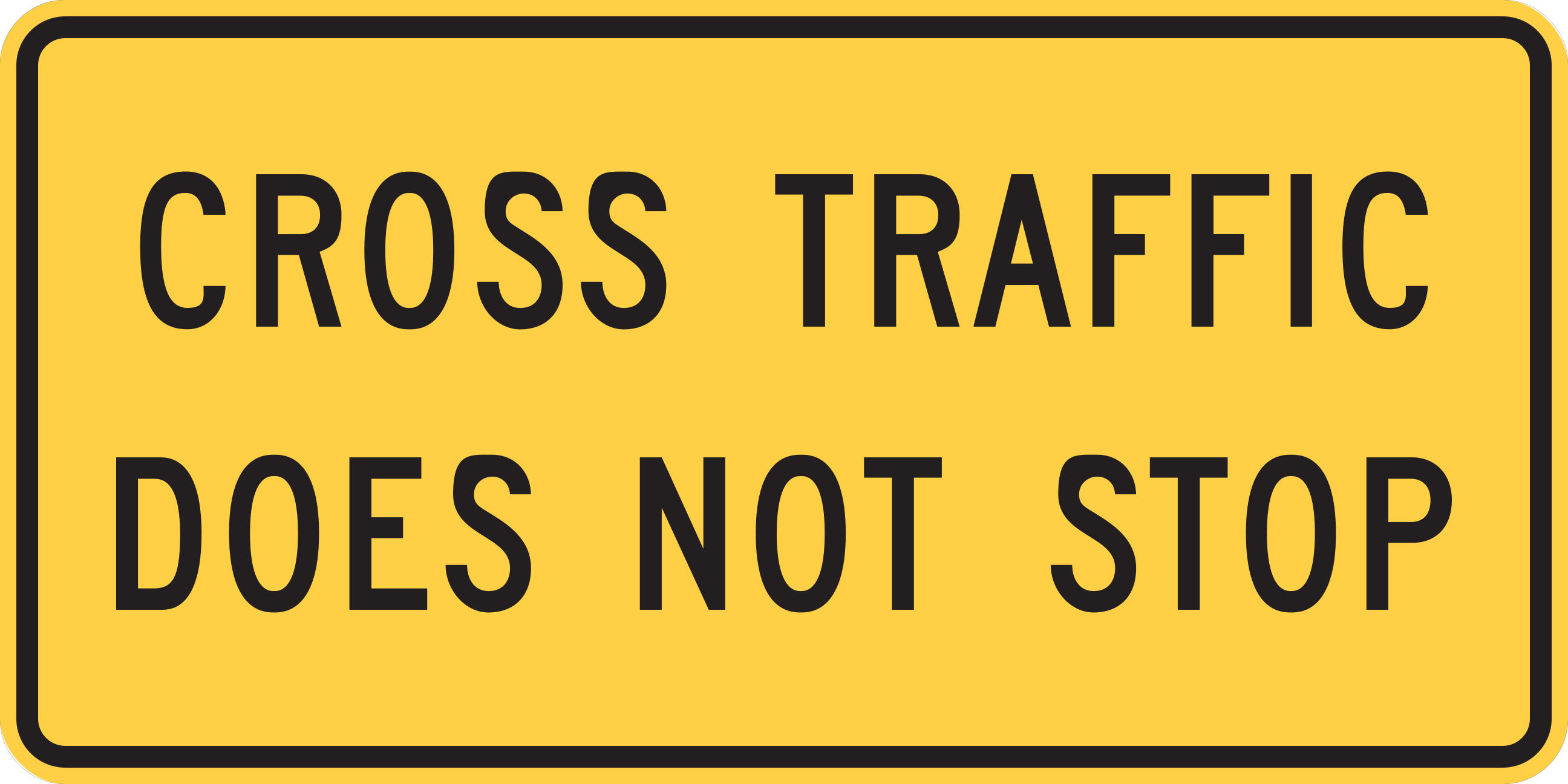
Cross Traffic Does Not Stop Plaque
The plaque exists because drivers at a stop sign often assume the intersection is an all-way stop and pull out after a brief pause. Where the cross road is fast or the sight lines are poor, that assumption is fatal, and the plaque names the danger in plain words.
What to do when you see the cross traffic does not stop plaque
Stop completely, then look both ways along the cross road for traffic approaching at full speed. Judge the gap by their speed, not by their distance alone. Pull out only when you can clear the intersection without forcing anyone to brake, and look again just before you go.
The signs it is confused with
Tests pair it with the red All-Way plaque, its opposite, which tells you every approach stops. One plaque says wait for traffic; the other says take your turn. Reading which one is under your stop sign changes the whole rule.
Signs are one topic of ten on every test
Every state practice test covers signs, signals, and markings among its ten topics, with every answer explained. Pick your state and see how its exam asks about signs like this one; it is free, with no sign-up.
Choose your stateQuestions about the cross traffic does not stop plaque
What does cross traffic does not stop mean?
The road you are about to cross has no stop sign. Traffic on it will not stop for you, so wait for a safe gap before entering.
Why is the plaque needed?
Drivers often assume a stop sign means everyone stops. Where the cross road is fast or hard to see, that assumption causes broadside crashes.
What is the opposite plaque?
ALL WAY, in red under the stop sign, which tells you every approach has a stop sign and vehicles proceed in turn.
How do I judge a safe gap?
By the speed of the approaching vehicle, not just its distance. If you would make it brake, the gap is too small.
How does this plaque appear on the written test?
In two-way stop scenarios asking who has the right of way, with the all-way plaque as the contrast.