Bump Sign: Meaning and What to Do
The yellow diamond reading BUMP warns of a raised irregularity in the pavement ahead sharp enough to unsettle a vehicle at speed: a heave, a patch, a raised joint. It is the road admitting its surface will hit back.
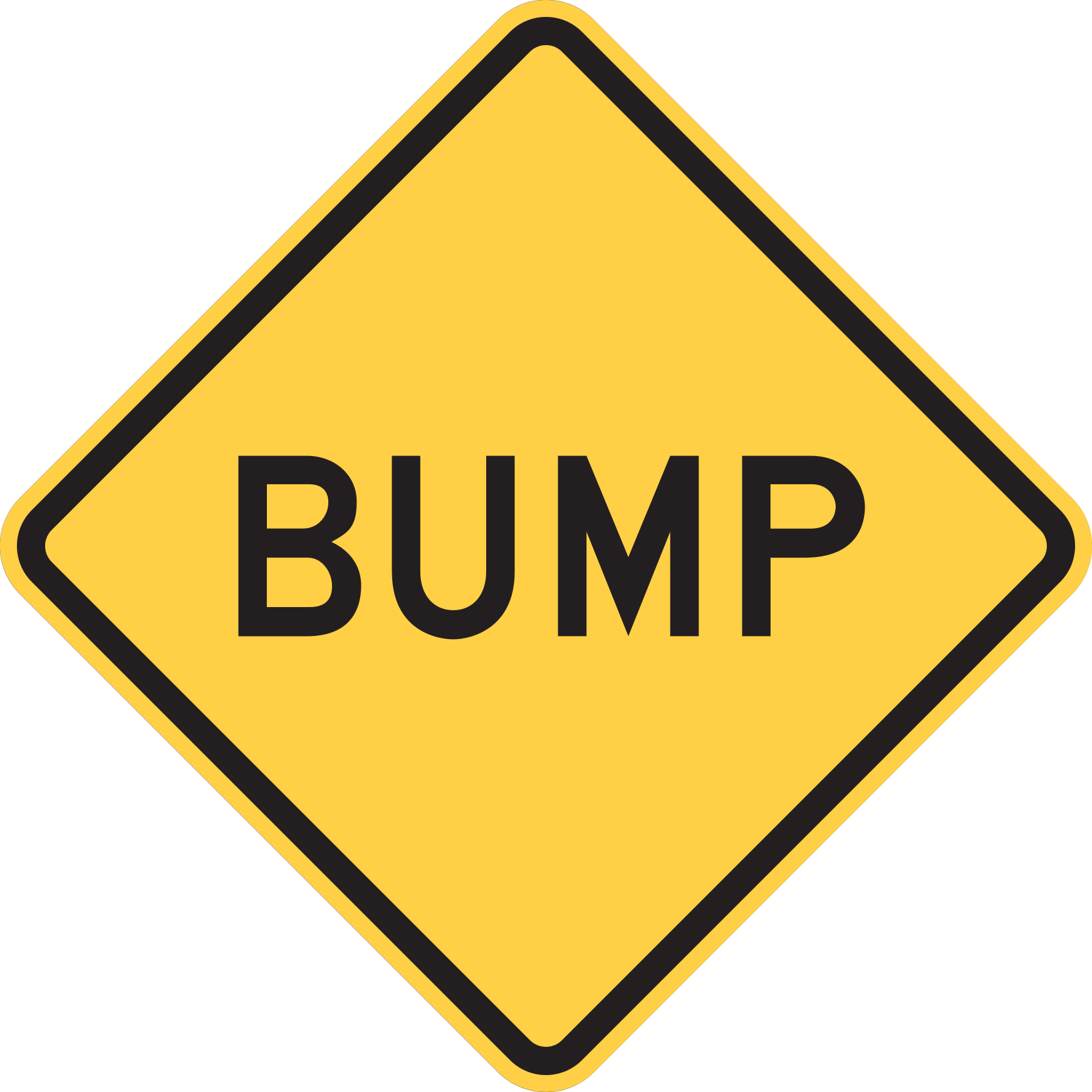
Bump Sign
At speed, a bump can lighten the tires enough to cost steering and braking for a moment, bottom out suspension, or launch cargo and passengers. The cure is boring and complete: less speed before it arrives.
What to do when you see the bump sign
Slow before the bump, keep both hands on the wheel, and avoid braking at the moment of impact so the suspension can work. Motorcyclists rise slightly off the seat and cross square; loaded vehicles slow the most.
The signs it is confused with
Tests pair BUMP with DIP, its inverted twin, and with SPEED HUMP signs, engineered calming humps in towns. The behavior is shared: slow first, let the suspension do its work, never brake mid-feature.
Signs are one topic of ten on every test
Every state practice test covers signs, signals, and markings among its ten topics, with every answer explained. Pick your state and see how its exam asks about signs like this one; it is free, with no sign-up.
Choose your stateQuestions about the bump sign
What does the bump sign mean?
A raised pavement irregularity is ahead, sharp enough to matter at speed. Slow down before it and let the suspension absorb it.
Why not brake right on the bump?
Braking loads the front suspension just as the bump compresses it, bottoming the car and lightening the rear. Brake before, roll over, resume after.
What does a bump do at high speed?
Momentarily unloads the tires, which costs steering and braking, and can bottom the suspension or toss cargo. Speed is the whole variable.
How should motorcycles take marked bumps?
Slowed, square to the feature, weight slightly off the seat, throttle steady. The bike's suspension handles what the rider does not fight.
How is it tested?
As legend-sign identification with DIP and in speed-adjustment questions where slowing before the hazard is the point.