Added Lane Sign: Meaning and What to Do
The yellow diamond with two arrows running together side by side tells both roadways the good news: the entering road gets its own new lane, so no merge is required. Traffic joins in parallel, each stream keeping a lane.
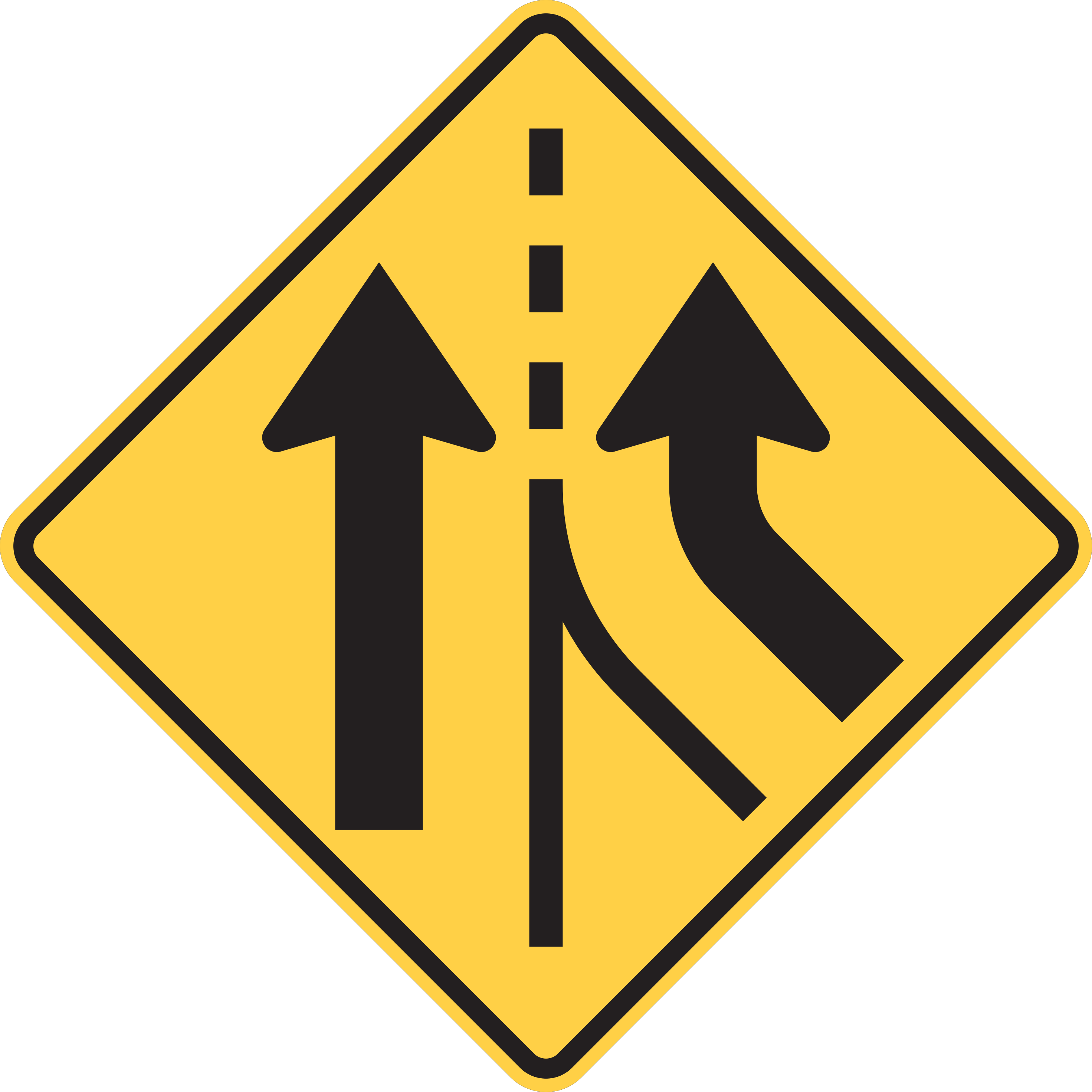
Added Lane Sign
The sign prevents two mistakes at once: the entering driver braking for a merge that does not exist, and the through driver swerving from an entering car that is not actually coming over. Everyone keeps their lane and speed.
What to do when you see the added lane sign
If you are entering, take your new lane at speed without forcing into the through lane. If you are on the through road, hold your lane; the joining traffic has its own. Change lanes later, if you need to, as an ordinary signaled lane change.
The signs it is confused with
The exam's pairing is with the Merge sign: joining arrows mean adjust and blend, parallel arrows mean no blending needed. Reading which one is posted changes the correct behavior completely, which is why the pair appears so often.
Signs are one topic of ten on every test
Every state practice test covers signs, signals, and markings among its ten topics, with every answer explained. Pick your state and see how its exam asks about signs like this one; it is free, with no sign-up.
Choose your stateQuestions about the added lane sign
What does the added lane sign mean?
The entering roadway continues as its own new lane; no merge is needed from either side. Both streams keep their lanes and speed.
How does it differ from a merge sign?
Merge means the entering traffic must blend into yours; Added Lane means it gets its own lane. Parallel arrows versus joining arrows.
What should the entering driver do?
Stay in the new lane at traffic speed. Cutting immediately into the through lane recreates the merge the road engineered away.
What should the through driver do?
Nothing special: hold lane and speed. The swerve away from a parallel-joining car is the mistake the sign prevents.
How is added lane tested?
Almost always against the merge sign, in identification and in behavior questions about whether blending is required.